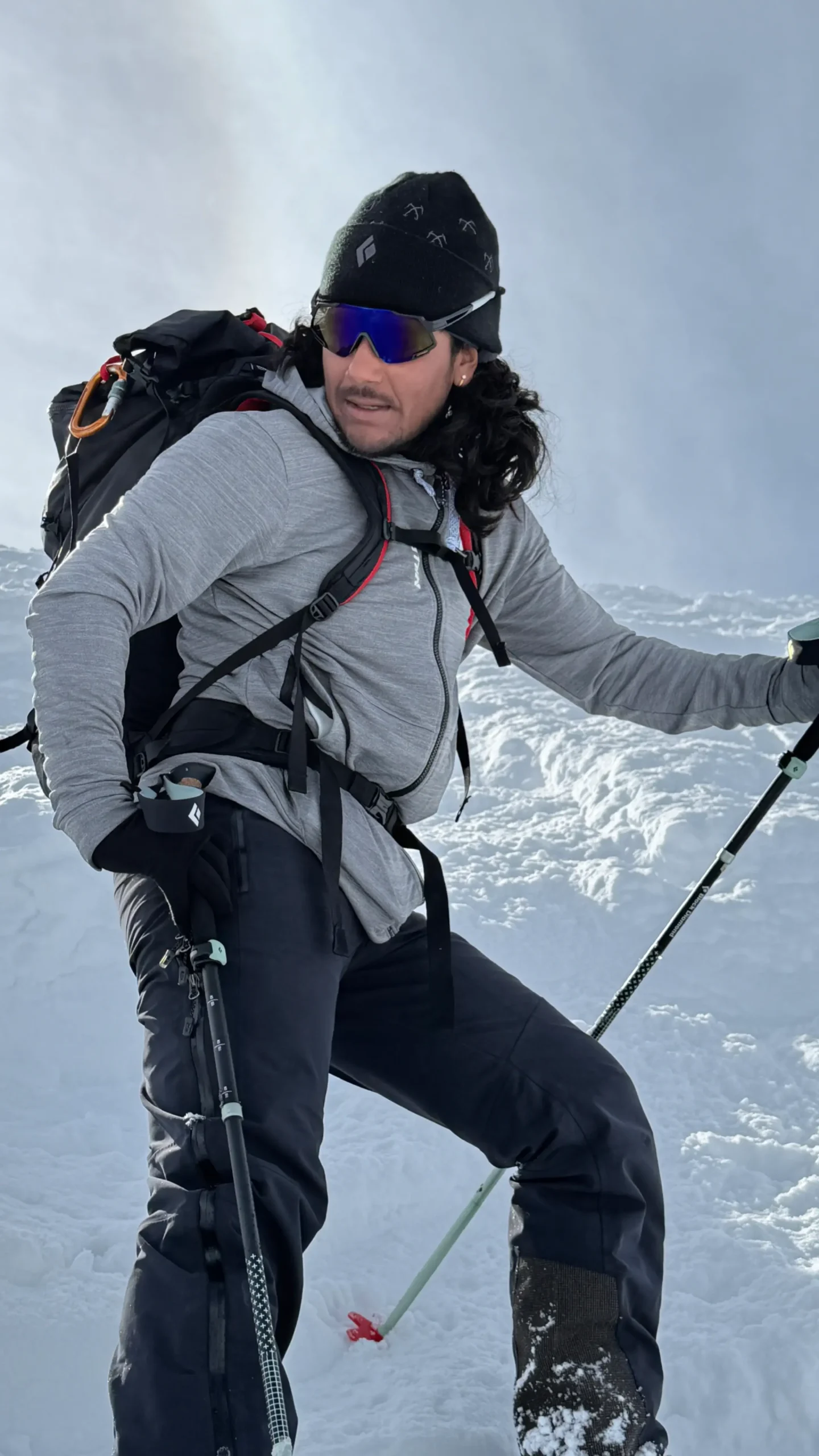
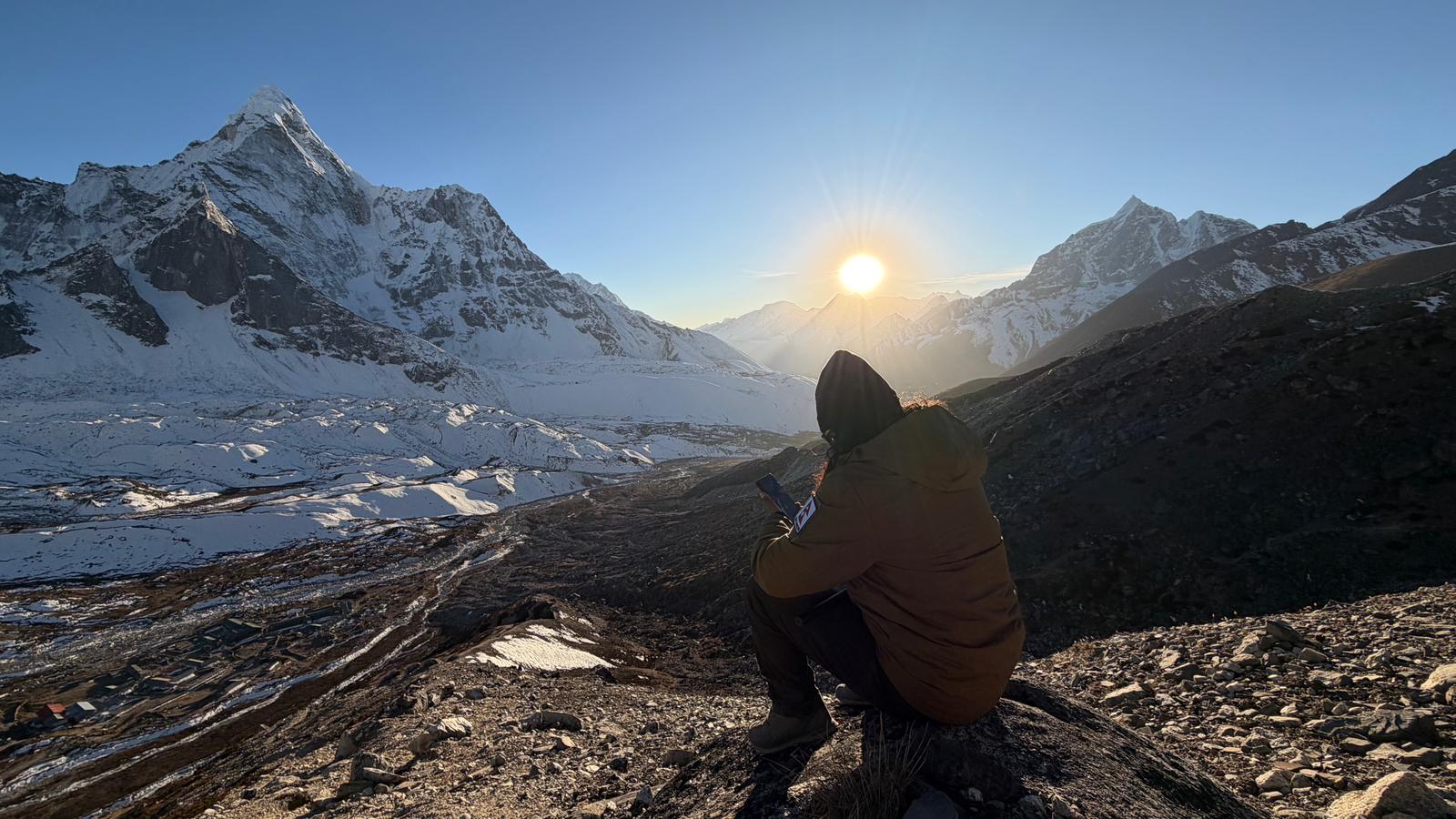
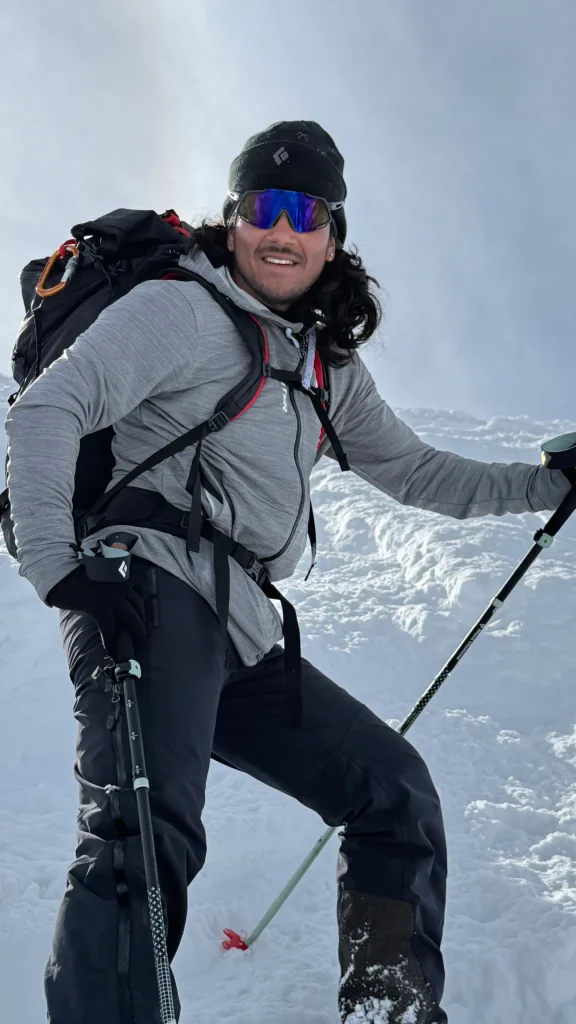
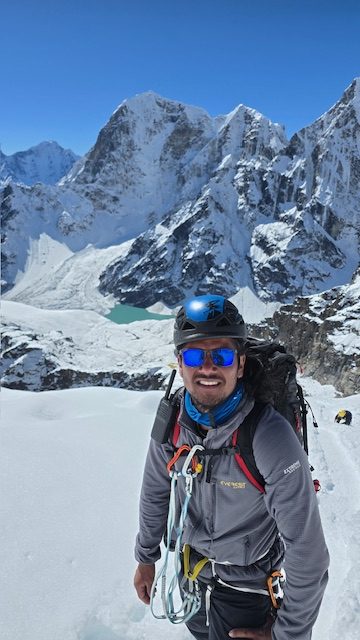
I was born on June 10, 2002, in the remote hills of Sindhupalchok, Nepal – a place where mountains are not just landscapes, but part of life itself.
From my childhood, I woke up seeing Himalayan ridges touching the sky. The steep trails, thin air, and unpredictable weather were not obstacles – they were teachers. They taught me endurance before I understood the word. They taught me courage before I knew fear.
I am Sabin Thakuri, and the mountains have shaped who I am.
From Village Trails to the World’s Highest Peaks
As a young boy, I walked steep trails daily. What once felt like ordinary village life slowly shaped my endurance and strength. When I moved to Kathmandu for further studies, my dream became clear: I did not just want to see the mountains – I wanted to master them.
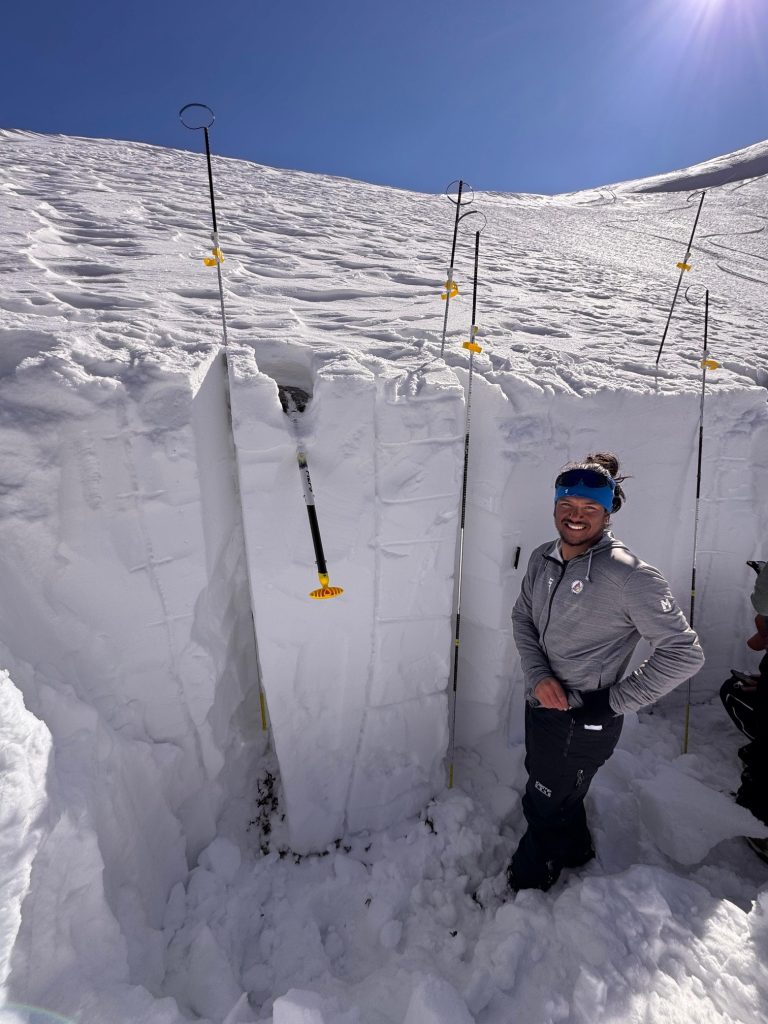
I completed my formal mountaineering and rescue training through NATHAM and NMIA because I believed passion alone is not enough. The mountains demand preparation, knowledge, and responsibility.
I trained in:
Rock climbing
Ice climbing
High mountain rescue
Rope fixing systems
Glacier travel and crevasse rescue
Emergency response in extreme altitude
Each certification was not just a document — it was a commitment to protect every climber who trusts me with their dream.
Over the years, I climbed higher, trained harder, and carried greater responsibility. But one of the proudest and most defining moments of my journey came on 28th December 2025.
On that day, after intense training, evaluation, and technical assessment, I successfully completed the Aspirant Guide Course conducted by:
And I officially became an Aspirant Mountain Guide of Nepal.
What Becoming an Aspirant Guide Means to Me?
This was not just another certificate.
The Aspirant Guide Course is one of the most demanding professional mountaineering programs in Nepal. It tests:
Advanced alpine climbing techniques
Ice and mixed terrain leadership
Client protection systems
Risk assessment in extreme altitude
Rescue leadership under pressure
Decision-making in life-threatening situations
The training pushes you beyond physical limits. It evaluates your judgment, your ethics, and your responsibility toward human life.
When I completed this course, I did not just feel proud — I felt accountable.
Because becoming an Aspirant Guide means:
I am trusted at a professional national level. I am recognized as a developing elite mountain guide. I am stepping into the highest standard of guiding in Nepal.
Standing on the Roof of the World
The first time I stood on the summit of Mount Everest, I did not feel victory. I felt gratitude.
Gratitude for my family. Gratitude for my team. Gratitude for the mountain that allowed me to stand there.
Since then, I have had the honor to guide and climb:
Lhotse
Broad Peak
Ama Dablam
Himlung Himal
Mera Peak
Island Peak
Lobuche East
But what truly defines me is not the number of summits.
It is the responsibility I carry when a climber looks at me and says, “Sabin, I trust you.”
At 8,000 meters, trust is heavier than any backpack. There, oxygen is thin. Mistakes are unforgiving. Decisions must be calm and precise.
I guide not for fame, not for numbers — but because I believe every climber deserves a safe return home.
What the Mountains Have Taught Me?
The Himalayas have taught me that strength is not loud.
True strength is:
Staying calm in a storm
Turning back when safety demands it
Encouraging a tired climber at 7,000 meters
Making decisions that protect lives, not egos
I have seen fear in the eyes of climbers. I have seen tears of joy on the summit. I have felt exhaustion that tests the soul.
And through all of it, I have learned one truth:
The summit is optional. Returning safely is mandatory.